Growing Older, Growing Quieter
Growing older changes more than our age; it changes the way we think, feel and connect with people. We slowly learn to choose peace over arguments, silence over explanations and meaningful relationships over endless conversations. But somewhere along the way, we must remember never to become too quiet to express love, share happiness and appreciate the people who make life meaningful.

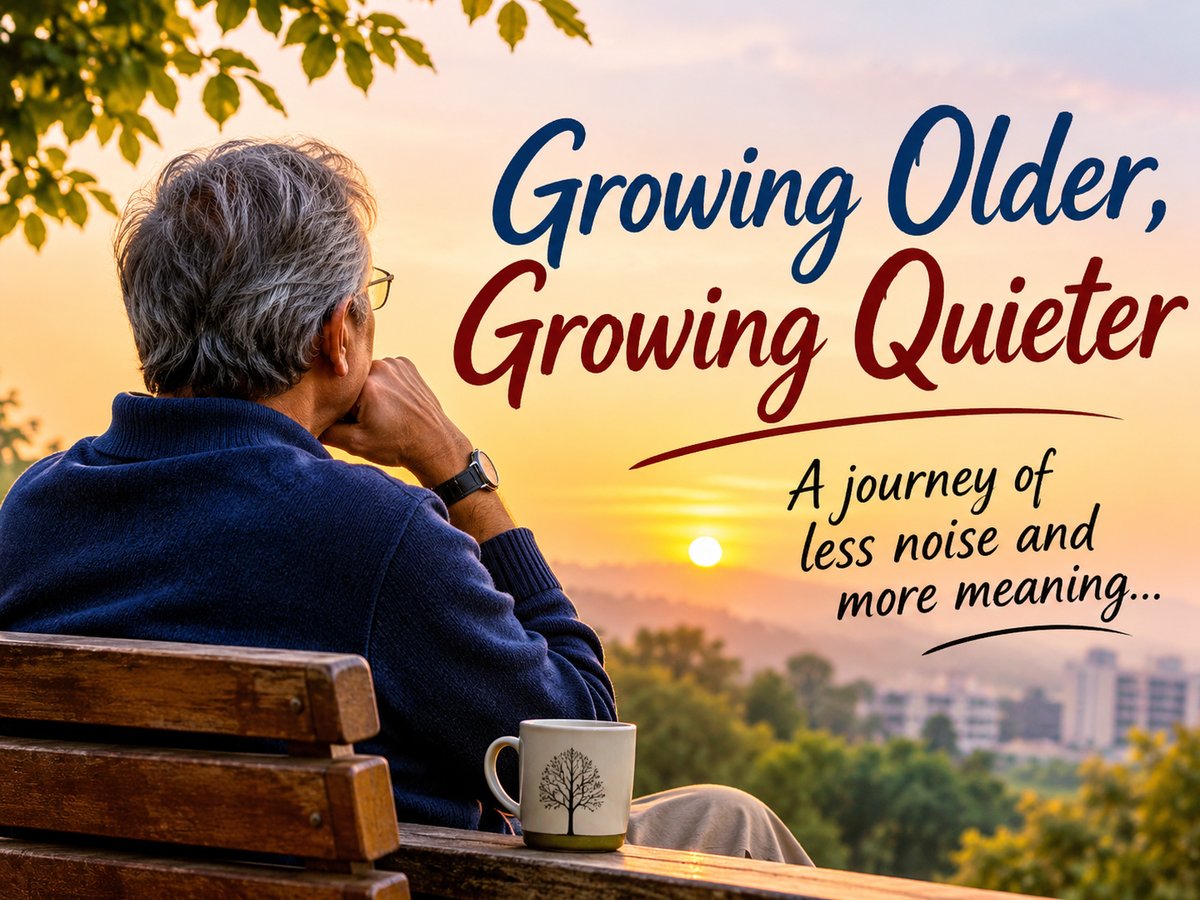
Somewhere between life's responsibilities and unexpected lessons, we slowly learn to speak less, feel more and choose our battles.
There was a time when we wanted to explain everything.
Why we made a certain decision. Why someone's words hurt us. Why we disagreed. Why we deserved to be understood.
We wanted to be heard, included and appreciated. A small disagreement could occupy our minds for hours, and a misunderstood comment could spoil an entire day.
But something changes as the years pass.
You begin to notice that you don't react the way you once did. You no longer feel the need to answer every question, correct every misunderstanding or win every argument.
You still care. You still get hurt. You still have opinions.
You have simply started choosing your battles.
Perhaps growing older doesn't make us less emotional. Perhaps it teaches us to carry our emotions differently.
Not Every Argument Needs an Answer
Remember when proving your point felt so important?
You would explain yourself repeatedly, hoping the other person would finally understand. You wanted to make things right, even when the conversation was going nowhere.
Now, you sometimes just smile and walk away.
Not because you have nothing to say, but because you have realised that some people aren't listening to understand. They are listening to respond.
Life teaches you that winning an argument doesn't necessarily improve a relationship. Sometimes, it only creates distance.
So you stop arguing over things that won't matter tomorrow. You let some comments pass. You choose silence where you once would have chosen confrontation.
And strangely, you begin to feel lighter.
When You Stop Explaining Your Life
With age comes an interesting realisation: not everyone needs to understand your decisions.
There was a time when being misunderstood bothered you. You wanted people to know why you changed jobs, why you couldn't attend a gathering, why you made a particular choice or why your priorities had changed.
You felt the need to justify yourself.
But people rarely see the complete picture. They see your decisions, not the struggles behind them. They see the outcome, not the sleepless nights, difficult choices and responsibilities that brought you there.
Eventually, you stop explaining every chapter of your life.
You understand that someone else's opinion doesn't have to become your burden.
And perhaps that is one of the quiet freedoms of growing older: being comfortable with the fact that not everyone will understand you.
When Parents Become Quieter
Perhaps the most emotional example of growing quieter is something we often notice too late.
Think about our parents.
There was a time when they had endless questions. Where are you going? When will you be back? Have you eaten? Why didn't you call?
Their concern sometimes felt excessive. Their advice seemed repetitive. We wanted more freedom and less interference.
Then we grew up.
We found jobs, built careers, got married, raised families and became busy managing our own lives.
And slowly, their questions became fewer.
They started waiting for our calls instead of calling repeatedly. They stopped asking about every little detail. Sometimes, they would have something to share but decided we were probably busy.
Perhaps they didn't have less to say. Perhaps they simply learned to ask for less of our time.
One day, you realise that the person who once couldn't let you leave the house without a dozen questions is now sitting quietly, waiting to hear your voice.
And that silence feels different.
It reminds us that time doesn't just make children grow up. It also makes parents grow older.
Friendships That Slowly Become Memories
Remember those friends with whom you could spend an entire afternoon doing absolutely nothing?
No appointments, no calendar reminders, no complicated planning. Someone would call, and within minutes, everyone would be together.
You laughed over silly jokes, discussed meaningless things and made plans you probably never followed.
Then life happened.
Careers, marriages, children, responsibilities and different cities slowly entered the picture.
The group conversations became less frequent. Birthdays were remembered through social media notifications. Meetings became difficult to arrange.
Sometimes, months passed without a single conversation.
Yet when you finally meet an old friend, something familiar returns. For a few moments, it feels as though nothing has changed.
You realise that growing older isn't always about losing people. Sometimes, it's about learning to love people from a distance.
And you begin to appreciate those rare friendships where silence doesn't mean the end of a connection.
We Still Get Hurt, We Just Hide It Better
People often assume that maturity makes us emotionally stronger.
But the truth is, growing older doesn't stop things from hurting.
A forgotten birthday. A call that never comes. Someone remembering you only when they need something. A family gathering where you feel strangely disconnected.
These things can still hurt.
The difference is that you may not express your disappointment anymore.
You don't complain. You don't confront. You simply lower your expectations.
But deep inside, there is still a person who wishes someone would notice.
Someone who would ask, "How are you, really?"
Someone who would listen without immediately offering advice.
Someone who would understand that sometimes, even the strongest person in the room needs a little kindness.
We become better at hiding our feelings, but that doesn't mean we stop needing affection.
The Responsibilities Nobody Sees
When we were younger, adulthood looked exciting.
We imagined having our own money, making our own decisions and living life on our own terms.
Nobody told us how much responsibility would come with it.
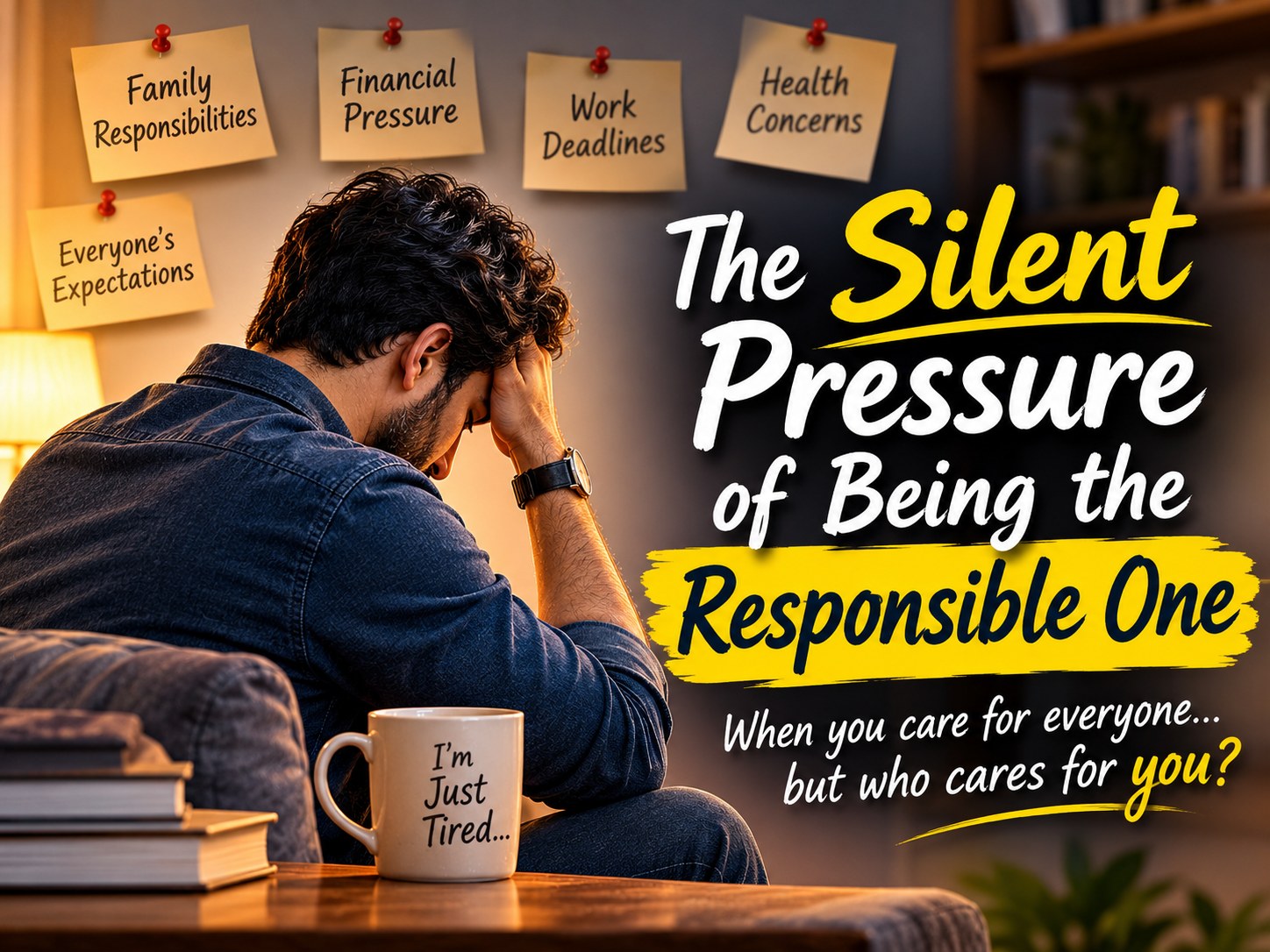
The bills, career pressures, children's education, ageing parents, household expenses and endless decisions.
You wake up every morning with a list of things that need your attention. Even when you're physically resting, your mind is somewhere else.
You might be worried about something at work but still come home smiling. You might be carrying financial pressure but continue making sure everyone else is comfortable.
And when someone asks how life is going, your answer is usually simple:
"Everything is fine."
Perhaps this is why many adults become quieter. Not because life has stopped affecting them, but because they have become so accustomed to managing everything that they rarely talk about what they are going through.
But we must remember that being responsible doesn't mean we have to carry everything alone.
Even the person everyone depends on needs someone to depend on.
We Begin Missing the Things We Once Took for Granted
Sometimes, an ordinary memory catches us by surprise.
A Sunday afternoon when the whole family was home.
The sound of someone calling everyone for lunch.
A father reading the newspaper while a mother prepared tea.
Siblings arguing over the television remote.
Friends arriving without informing anyone.
At the time, these moments seemed ordinary. We were busy waiting for something bigger, something more exciting.
But years later, those ordinary moments become the memories we hold closest.
We realise that happiness wasn't always about expensive holidays, impressive achievements or perfect photographs.
Sometimes, it was simply having everyone around the dining table.
Sometimes, it was a conversation that lasted longer than expected.
And sometimes, it was being young enough to believe that those moments would last forever.
Growing older has a strange way of making us appreciate the things we once overlooked.
But Silence Isn't Always a Bad Thing
There is also something beautiful about becoming quieter.
You begin enjoying your own company. A cup of tea, a good book, an evening walk or simply sitting near a window becomes enough.
You no longer need constant attention or endless conversations to feel content.
You become more selective about the people you spend time with. You value meaningful conversations over crowded gatherings.
You discover that peace is not always found in having more. Sometimes, it comes from needing less.
But there is a difference between enjoying silence and becoming isolated.
Let's not become so comfortable keeping things to ourselves that we forget to reach out, make new memories or tell someone when we miss them.
There is still plenty of life waiting to be lived.
Don't Let Maturity Take Away Your Laughter
Perhaps the biggest danger of growing older is that we sometimes confuse maturity with becoming emotionally distant.
We stop expressing excitement. We hesitate to show affection. We become careful with our words and reluctant to share our feelings.
But why should growing older mean becoming less expressive?
We can be mature and still laugh loudly.
We can be experienced and still get excited about small things.
We can be responsible and still make spontaneous plans.
We can learn to walk away from unnecessary arguments without walking away from meaningful relationships.
The younger version of us, the one who laughed without worrying, made friends easily and found happiness in simple things, is still somewhere inside.
We shouldn't lose that person completely.
Before the Conversations Become Memories
Maybe growing older really does make us quieter.
We speak less because we have learned more. We argue less because we understand life better. We expect less because experience has taught us that not everything goes according to plan.
But there are some things we should never become too quiet to say.
Tell your parents you love them while they can still hear it.
Call an old friend before another year passes.
Appreciate your partner for the little things that often go unnoticed.
Tell your children how proud you are of them.
And when someone asks how you are doing, perhaps allow yourself to be honest instead of automatically saying everything is fine.
Because one day, the conversations we keep postponing may become the conversations we wish we had.
Growing older is inevitable. Growing quieter may be natural. But let's never become so quiet that we forget to express love, share happiness and make the people around us feel important.
After all, when we look back at life, we probably won't remember how many arguments we won or how many people agreed with us.
We'll remember the voices, the laughter, the people who sat beside us and the moments when we felt that we truly belonged.
Let's talk:
Have you noticed yourself becoming quieter with age? Do you think it's maturity, life experiences, changing priorities or simply getting tired of explaining yourself?
Share your thoughts. Perhaps many of us are experiencing the same change but have never really talked about it.